Sacred Heart College
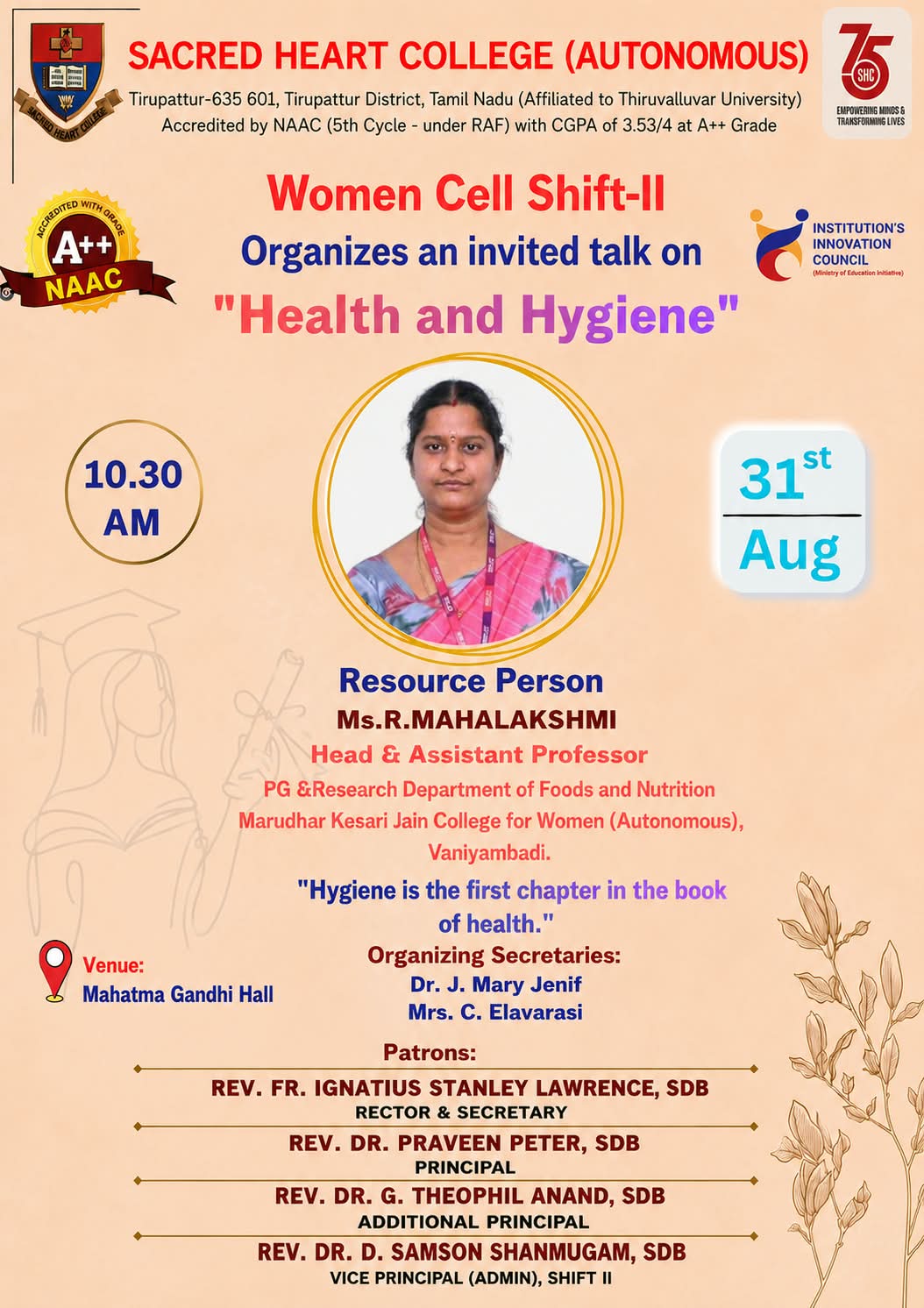
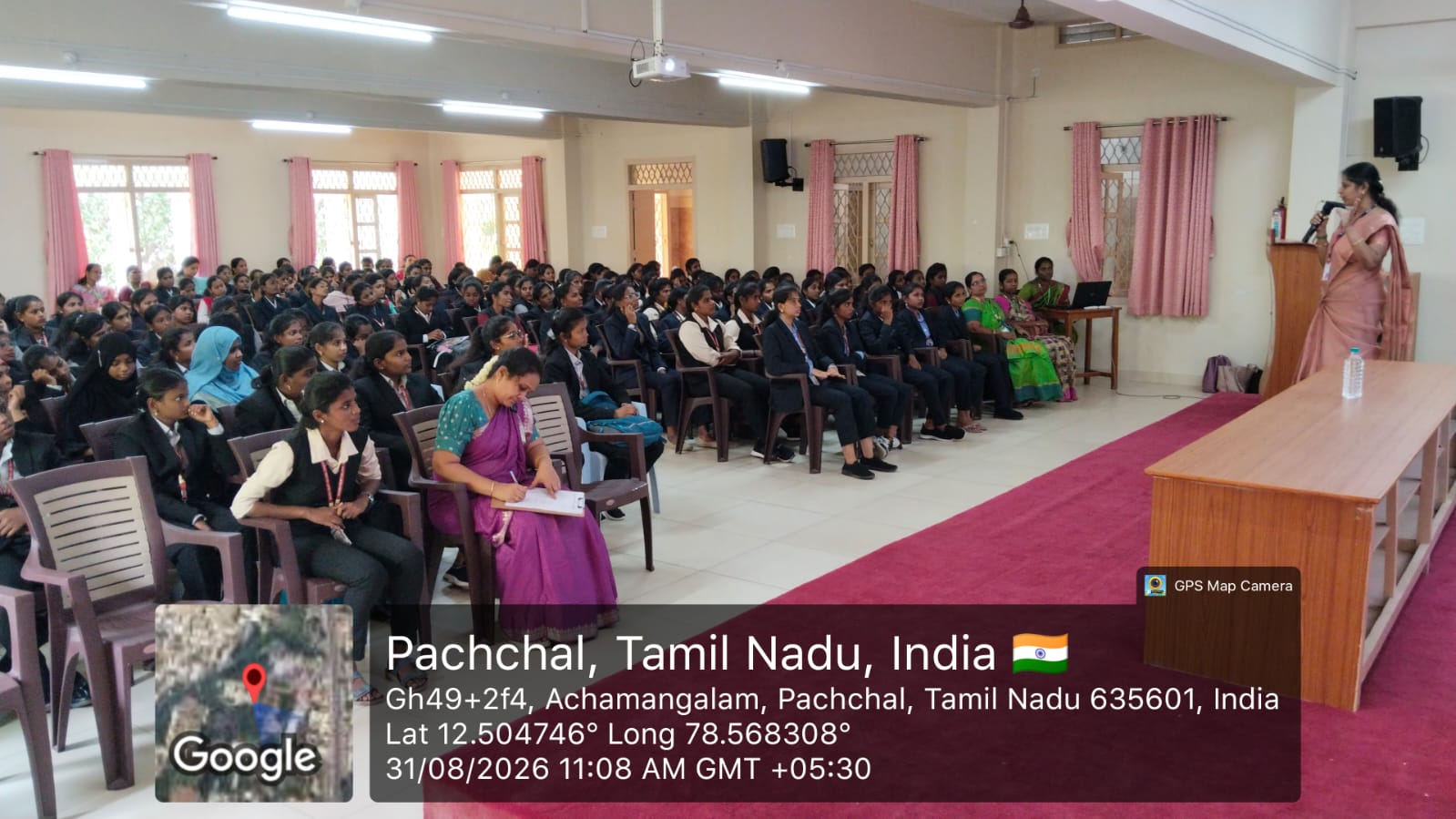
The Women Cell – Shift II, Sacred Heart College (Autonomous), Tirupattur, organised an invited talk on “Health and Hygiene” on 31 August 2026 at 10.30 a.m. at Mahatma Gandhi Hall. The programme was organised with the aim of creating awareness among students about the importance of maintaining good physical and mental health, practising personal and public hygiene, and adopting healthy lifestyle habits.
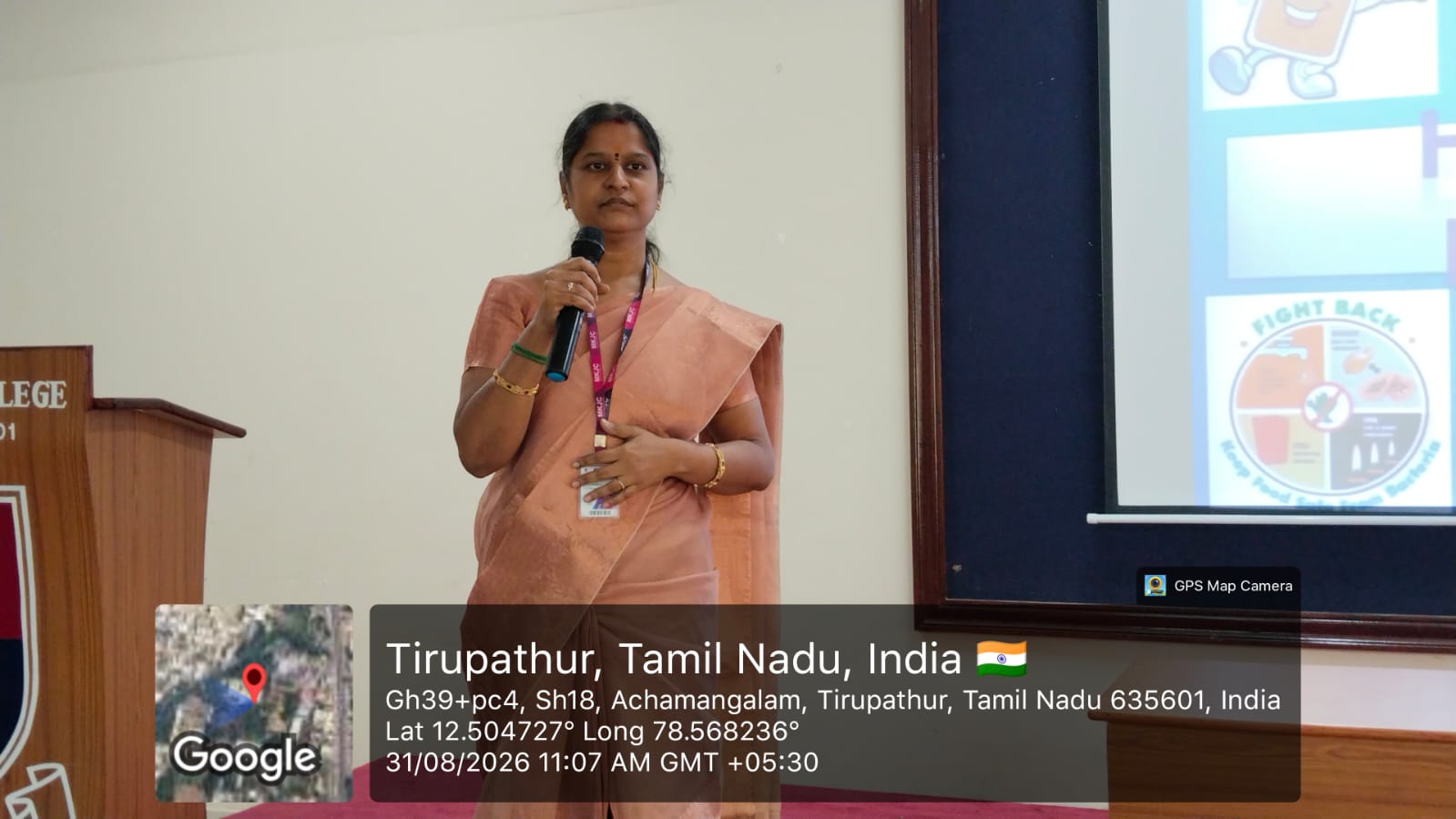
The session was delivered by Ms. R. Mahalakshmi, Head & Assistant Professor, PG & Research Department of Foods and Nutrition, Marudhar Kesari Jain College for Women (Autonomous), Vaniyambadi. The programme was organised by Dr. J. Mary Jenif and Mrs. C. Elavarasi. The resource person began the session by explaining the different aspects of health, particularly physical and mental health. She highlighted that health is not merely the absence of disease but includes the overall well-being of an individual. She explained the various determinants of health, including the individual's lifestyle, family, surroundings and environment. She emphasised that a healthy environment and supportive family play an important role in maintaining an individual's well-being.
The speaker also discussed the responsibility of maintaining health at different levels. She explained that individuals have a responsibility to take care of their own health, while the community, State and international organisations also have important roles in promoting public health and preventing diseases. An important part of the session focused on weight management. The resource person introduced a simple method of estimating ideal weight by using the formula Height in centimetres – 100 as a basic reference. She encouraged students to follow balanced eating habits and remain physically active rather than adopting unhealthy methods of weight reduction.
The resource person described the characteristics of a healthy person, such as clear skin, bright eyes, good appetite, around eight hours of sound sleep, fresh breath and regular physical activity. She advised students to maintain a disciplined lifestyle and reduce excessive mobile phone usage, particularly to ensure adequate sleep and physical activity. The consequences of poor health were also explained. The speaker highlighted lifestyle-related health problems such as obesity, hypertension, diabetes, stroke and high cholesterol. Students were encouraged to prevent these conditions by making healthy choices in their daily lives.
A major focus of the talk was hygiene. The speaker explained the meaning and importance of hygiene and differentiated between personal hygiene and public hygiene. She stressed the importance of cleanliness of the body, food, surroundings and public spaces. The consequences of poor hygiene, including the spread of infections and diseases, were also discussed. The resource person further explained the difference between disease, illness and sickness, helping the students understand that these terms refer to different aspects of an individual's health condition and experience.
The session also included useful dietary suggestions. Students were advised to consume protein-rich foods, reduce excessive oil consumption and follow a balanced diet. Nutritious foods such as ragi and dates were recommended as healthy additions to the daily diet. The speaker encouraged students to make informed food choices and develop sustainable healthy eating habits. The talk was highly informative and practical, as it connected health and hygiene with the students' everyday lives. The session created awareness about the importance of balanced nutrition, physical activity, adequate sleep, mental well-being, personal cleanliness and responsible use of technology. The students gained valuable knowledge about preventing lifestyle diseases and maintaining a healthy and hygienic environment.
The programme successfully fulfilled its objective of sensitising students to the importance of health and hygiene as essential components of a healthy and productive life. The session concluded with a renewed understanding among the participants that maintaining good health is a shared responsibility involving the individual, family, community and society at large.